Showing posts with label healthy. Show all posts

Tuesday, January 26, 2010

HELLOOOO HUMMASSSSS


Hey guys, I know I talked about hummus and pita as being a great snack in a post a while back, and that still is true, buuuttttt... I have been eating that almost every day for a snack so I wanted something new. Now I love hummus so I did not want to cut that out of my diet because the oils in it and the protein are good for me, so instead I decided to get rid of the pita bread and swap it out for some veggies!!! Baby carrots and cucumber slices are great for dipping in hummus. Both baby carrots and cucumber are super low calories but are packed with a lot of vitamins! Eating them with hummus gives you even more benefits. Hummus is often times made with chickpeas. Chickpeas have no saturated fat and even better... no cholesterol. They are great because they aid in improving blood sugar levels and help fight cholesterol. Also, like i mentioned, they are high in protein.Also, Tahini is usually found in hummus, which is a sesame paste that is also a great source of protein and calcium, and even better, the fat contained in tahini is mainly unsaturated fat. As for other ingredients, olive oil is a good one. It is one of the more healthy of oils, containing mostly monosaturated fat. Olive oil helps the body's heart remain healthy and also aids in regulating cholesterol levels.

nutritional information about hummus from this site: http://mideastfood.about.com/od/hummusrecipes/a/humus_caloric.htm

Thursday, November 5, 2009

I am back!!

Hey guys I know its been a while since I have posted on this and I apologize for that but I have been super busy. I am no settled into college and trying to get by in all of my classes, and have so much to say about nutrition and staying healthy at college. So I came to campus in really good shape and on a very healthy diet that I was happy with. I thought that it would not be very hard for me to continue the intense workout plan that I was followed and my nutritious eating habits. I was very wrong. As an engineering major I have tons of homework and group projects which keeps me pretty busy. I also got involved in a few other things on campus like clubs and a sorority. So between school and extra-cirricular activities I do not have that much time on my hands to work out. I also do not have that much time to prepare a meal, or think about what I am eating. So you are probably thinking, well if she doesnt have that much time to eat then she must have lost a lot of weight. Wrong. I have gained a few unwanted pounds and am very unhappy with my eating habits here. Below is a picture of a lot of the types of food found in the dining halls.
Although the foods in this picture do not look super appetizing, that is not the case in the dining halls of most campuses. The food is great! which is the problem. There are the stations like make your own pizza/pasta, create your own quesadilla, the fried food sections, the "home style" section, which is really just all carbs and fat (lovely I know), and of course you cant forget the desert station, which consists of EVERY type of desert ever known to man, we have the ice cream (with the chocolate/carmel sauce and candy toppings of course), the cake (all different types), the cookies, the puddings, and numerous other baked goods. Oh and I almost forgot about the create your own waffle station, that is open for EVERY meal, not just breakfast. Now this one is the killer for me sometimes because I love waffles. So now let me ask you, how easy is it for you to say no to delicious foods like the foods shown below when they are right in front of your face.
In conclusion, I think the problem is that all of the delicious foods in the dining courts are all super fatty and unhealthy, and they have no nutritious foods that taste good. The salad bars are terrible and the fruit is usually terrible too. I thought it would be much easier to stay healthy at school but now I am starting to realize it is a serious challenge to eat nutritiously every day while living on campus. It is a serious problem. Anyways, keep checking this page for updates because now that I am back I am trying to stay back for good and plan to frequently update this page when I have more tips and thoughts about my attempts at staying healthy at college.

Thursday, July 16, 2009

Pick up those chopsticks!


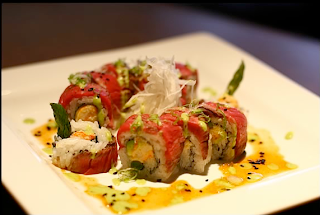
Alright so through the years I have found that people either LOVE sushi or HATE sushi. I for one absolutely LOVE SUSHI. I am a huge fan of sushi. In fact my boyfriend and I eat sushi all the time. How might we afford to each sushi all the time you might be wondering? well We have found an amazing sushi place that has the best happy hour in the world. If you guys live in southern California (or Las Vegas, Nevada, Glendale or Tempe, Arizona) you should definitely check out this place called Kabuki. They have 10 locations spread out southern California and they are amazing. Their happy hour is great. They have sushi rolls starting at $2.50, and do not let the low price fool you about the quality of the fish, their fish is always fresh and great. Anyways though that is off topic. This post is really about why sushi is good for you and should be a part of your diet. So for all you sushi lovers who are trying to live a healthy life-style, read this, and DO NOT CUT SUSHI OUT OF YOUR DIET! (the one great food that tastes amazing that you don't have to deprive yourself of! yes!!). So anyways, sushi is so good for you because.....Sushi uses simple, healthy ingredients, such as seafood, seaweed, rice and vegetables. So whether you are trying to keep your high blood sugar down, boost your energy levels, or just drop a few pounds pick up those chopsticks and eat your SUSHI!!! Even the highest calorie varieties of fish used in sushi (like tuna, salmon and eel) contain less than 200 calories per serving. Thats about half of what you would get if you ate a prepared steak. Shrimp and octopus are even lower! (like around 100 calories per serving). And anyways the fatty fish calories are full of the nutritional power of not only protein, B-vitamins, and minerals like selenium, but also Omega-3 fatty acids. "studies continue to demonstrate the enormous role these fats play in maintaining a healthy heart,and metabolism in general. The Omega-3's have even been touted to improve conditions such as arthritis, psoriasis, and depression." *
Raw foods (such as the fish in sushi) are often the best for preserving enzymes and other nutrients in your body, as long as the raw foods are fresh of course. Time, Heat, Freezing, Microwaving, etc destroy those nutrients. Although most sushi contains white rice, which is pretty much empty carbs/calories, most places allow you to substitute white rice with brown rice which contains many more nutrients and is high in fiber (it tastes good too, trust me). As for soy sauce, don't worry about that. It is a fermented soy product that does not have any problems if the proper amount is used (obviously if you down soy sauce like water you will experience some problems , but if you dip your sushi in it or pour some on your rice you are fine). The salt is not a problem in it because people tend to not use that much soy sauce because it is so salty and strong. Also it is definitely not fattening or high in calories, so that is good. And as for wasabi, don't worry about it. It is so spicy that you don't consume enough of it to make the calories noticeable. It is also pretty rich in Vitamin C.
The seaweed, rice and vegetables in the sushi add only about 150 calories or less per serving, and these calories provide even more vitamins, minerals, and fiber (especially if you sub white rice for brown rice like I mentioned earlier), and also are a good source of carbs to complement the protein in the fish.
Also the artful way in which sushi is presented has yet another nutritious benefit to dieters. The portions are small, by american standards at least, and consists of several bite-sized pieces, encouraging the eater to practice the art of slowly savoring and eating their food.
So there you have it. Reasons to eat sushi! So go out right now and enjoy some delicious sushi rolls, and do not feel guilty about it!

----------------------------------------------------------------------------------------------------
*quoted from http://www.eatsushi.com/article.asp?X=38

Sunday, May 31, 2009

Super good, cheap, quick pizza

Alright so I made this pizza a while ago, but I didn't get around to posting this recipe. This is definitely one of my favorite recipes that I have come across so far. It is from a "cooking light" cookbook that I bought a few months ago, which by the way I think is AMAZING. I love this pizza because it is soooo quick. It only takes about 15 mins to make and it is so good. I definitely think you all should try it.

Here's what you need:
  • 1 can refrigerated pizza crust dough
  • Cooking spray
  • 1 teaspoon extra-virgin olive oil, divided
  • 1 garlic clove, halved
  • 5 plum tomatoes, thinly sliced (about 3/4 pound)
  • 1 cup shredded fresh mozzarella cheese
  • 1 teaspoon balsamic vinegar
  • 1/2 cup thinly sliced fresh basil
  • 1/8 teaspoon salt
  • 1/8 teaspoon black pepper

Here's what you need to do:

Preheat oven to 400°.

Unroll crust dough onto a baking sheet coated with cooking spray; pat/roll into a 13 x 11-inch rectangle.

Bake at 400° for 8 minutes. Remove crust from oven, and brush with 1/2 teaspoon oil.

Rub crust with cut sides of garlic.

Arrange tomato slices on crust, leaving a 1/2-inch border; sprinkle evenly with cheese.

Bake at 400° for 12 minutes (or until cheese melts and crust is golden).

Combine 1/2 teaspoon oil and vinegar.

Sprinkle pizza evenly with sliced basil, salt, and pepper. Drizzle the vinegar mixture evenly over the pizza.

Cut pizza into 8 pieces.

Nutritional Information

Calories:
298
Fat:
10g (sat 4.6g,mono 3.5g,poly 1.4g)
Protein:
12.2g
Carbohydrate:
38.6g
Fiber:
2.1g
Cholesterol:
22mg
Iron:
2.6mg
Sodium:
595mg
Calcium:
175mg

*Information from Cooking Light Complete Cookbook: a fresh new way to cook

Wednesday, May 27, 2009

Ask A Nutritionist!

Throughout this project I have come up with a lot of questions that I would love to be answered. So I decided to get in touch with two nutritionists that I know and see if they could help me. I was also curious as to see if each nutritionist had the same beliefs on the same things, so I asked both nutritionists the same questions. The first interview is with a nutritionist named Diane McCabe (her answer is in green) and the second interview is with a nutritionist named Gay Bonilla (her answer is in blue). 

-What is your opinion on High Fructose Corn Syrup?
D: I believe the danger of too much high fructose corn syrup is twofold:  first of all, it is almost always found in foods that are nutritionally empty calories, like soft drinks, pop tarts, and sweetened fruit drinks.  Your body metabolizes high fructose corn syrup differently, and does not release the hormone insulin, which tells your brain that you've eaten, so those calories don't register and we just keep eating.  Also, most sources of hfcs are genetically modified, and we don't even know what problems that will create for us over time.  So I wouldn't say never eat it, just minimize it.  And, if you want a soft drink, a regular one is better than a diet drink -- just don't drink them too often.
G: I discovered in researching this that it basically is treated like any other sugar...bottom line is to limit sugars and eat whole foods.  HFCS has increased in use >1000% between 1970 to 1990. [and even more to date]  HFCS is made up of 80% of fructose. Fructose is poorly absorbed in the gut. Some of the consequences of this is a high osmotic load, rapid bacterial fermentation, alters the gut bacteria and can change GI motility...hence you could get bloating, gas and diarrhea if you took too much of the HFCS.  Too much of any sugar including HFCS in the diet can increase one's blood lipids i.e. triglycerides, contribute to wt gain, fill you up on junk and leave little room for healthy food.   HFCS offers really no nutritional value.

-Do you agree with the belief that it is better for people to eat 6 smaller meals every 3-4 hours rather than 3 normal/big meals throughout the day?
D: Whether one eats three times a day or 5-6 times a day depends entirely on that individual and they way their body processes and digests food.  Some of us have faster metabolisms, and are higher energy, so we probably need to eat every two to three hours so that our bodies have a constant source of nutrients.  Others have a slower metabolism and digest food more slowly, so eating three times a day works best.  There is no right or wrong on this one, do what feels best for you and your schedule.
G: Yes, that is how I eat. I listen to my body and eat when I am hungry. When you are "grazing" you eat small amounts throughout the day. You have a more even level of your blood sugar and avoid  swings. Often after a large meal you feel sluggage and in need of a nap. This is because a lot of blood supply is redirected to your gut to help absorb the food...many think that they will lose wt by starving themselves by skipping breakfast [which by the way is the most important meal of the day to "break the fast"], having a lite lunch, but by dinner they are starving and gorge themselves on a huge meal...this is tough on the body to have to digest this huge meal and then one tends to sit around and not use much of the kcals for the rest of the evening contributing to fat deposition and wt gain.

-What things should people pay attention to on nutrition labels? (like low cal/high protein? low carbs etc)
D: Nutrition labels can be a bit deceiving, so you first want to look at the list of ingredients -- the first few ingredients are usually the bulk of what's inside.  Then look at sodium, sugar, protein, fiber and decide if it's worth it!  For example, yogurt is a good for you, right?  Well it can be, or it can be loaded with high fructose corn syrup and other sugars.  Your best choice is usually organic plain yogurt, and add your own fresh fruit, honey or agave sweetener, or whatever you like.
G: It really depends upon what kind of diet you are on...if you were trying to lose wt then low kcal is important. [some of the diets that people have has success with wt loss are the low carb, high protein - Atkins, Southbeach, etc].  If you are a diabetic then you really need to watch the carbohydrates and sugars. If you need to gain wt then total kcals, protein and fat are important. If you are on a low salt diet because you retain fluids or have high blood pressure then the sodium. If you are on a Heart Healthy Diet then looking at sodium, fat, cholesterol are important.  I think eating like the Mediterraneans do is the smartest: Fresh food that is bought that day, whole grains [not white, processed breads, foods], fruit, veggies, fish, nuts, legumes, seeds some red wine, olive or canola oil. If you have dairy products they should be fat free.

-What are the differences between the different types of carbs. Which do people want to be eating and which should people stay away from?
D: Carbohydrates got a bad rap during the Atkins/South Beach Diet eras.  Carbs are not bad -- fruits and vegetables are carbs, as are whole grains.  What you want to avoid are the nutritionally void carbs like white bread, white rice, white sugary stuff.  Always go for fresh, whole foods -- the way Mother Nature intended them.
G: carbohydrates can be anything from a white piece of bread to legumes and lentils...again eating the whole food is best. Brown rice, beans, Brown crusty bread that the first ingredient says "whole", sweet potatoes, potatoes, oatmeal,granola, quinoa, veggies, fruits, etc.
Think Brown not white.  You will get carbs from milk too, candy, snack bars, etc...The milk is fine, but trying to avoid the processed food is best. The body does better with the whole food. Many crave the junk food that is filled with carb's, fat and salt....potato chips, french fries, etc...stick to the whole food.  Plant based is always best...eat the foods that have come the least distance from the ground - less processed.

-What are the differences between the different types of fats? Which are good fats and which are bad?
D: Good fats are called "Essential Fatty Acids" because you must get them in your diet --your body cannot produce them.  Examples of good fats are:  fish oil (Omega 3's) especially from wild caught salmon & sardines -- the best sources through fish, although other fish is good like tuna, tilapia and rockfish.  You just want to minimize your consumption of large fish because of mercury levels (mercury was also found in somehigh fructose corn syrup products recently)..  Other examples of good fats are:  flax seeds, walnuts, almonds, all other nuts, sesame seeds and other seeds, avocados, olives and olive oil.
G: Avoid Trans fats[like crisco, full kcal margarine,french fries, etc]...they are man made and worse than the saturated fat from animals [lard, chicken skin, meat fat, cheese, whole dairy products]. Trans worse, Saturated next, Polyunsaturated [soybean, corn, etc oil] ok in small amounts and Monounsaturated [olives, olive and canola oils, nuts and seeds, avocado are pretty neutral on the diet and the blood lipids [ ie. cholesterol ]. Remember that fat is needed by the body, but only in small amounts. The best 2 to get it from are the mono's and the polys'.

-What foods, spices, drinks, etc do you consider necessities to have in one's house?
D: Good spices and ingredients to always have on hand would include fresh fruits and vegetables, frozen is the second best choice.  Stay away from too many canned foods except canned tuna, sardines and salmon are okay, and canned beans are a lot more convenient.  You probably always want good whole sprouted bread in the freezer, organic peanut butter and almond butter, organic free range eggs, good yogurt and lighter cheeses like cottage cheese, feta and goat's milk cheese and cheddar (always get organic dairy).  You may want some good cereals that are high in fiber and protein like some of the Kashi cereals, and either soy milk or regular lowfat -- organic of course.  And some whole grain pasta, organic marinara sauce, olive oil, lemons, oregano and basil, soy meat crumbles in the freezer and frozen spinach. Think about always having something at hand so you can throw together a satisfying and balanced meal in a hurry.
G: Whole foods, less processed, any spices that you like to cook with, water is the best drink [but not from a plastic bottle unless it is BPA free [another chemical to avoid]. You can buy BPA free bottles now at many stores. Some people drink some of the speciality juices that are made from whole foods. Try to limit anything made from HFCS ie. sodas, etc. We have nonfat milk that we drink. Alcohol in moderation.  It is what you do most of the time that counts.

-What things do you consider essential for every college student to have in their diet, and have in their dorms or apartments?
D: (combined this question and the question above so only answered the question above)
G: vitamin D and calcium sources. You need about 1000iu of vitamin D3 [cholecalciferol] daily despite time in the sun [ I take a supplement daily] and at least 1200mg calcium daily [I look at my milk and yogurt and if I have cheese intake for the day and then take a calcium supplement if I did not reach the 1200mg/d]. If you don't get enough calcium you will be pulling it from your bones. Your body must maintain a certain level of calcium in the blood and it will get it from your bones if you don't provide it through diet. Vitamin D deficiency is a lot more common than once thought of...it is being related to many disease states now.  The above whole foods are always a good start. Try to limit the junk food and alcohol. The Mediterranean diet is best. Could always mix alcohol with some of the better 100% juices or a diet 7-up to reduce the alcohol.

-What are some of your favorite healthy snacks?
D: Some of my favorite snacks are:  apples and peanut butter;  grapes or berries and lowfat cheese like cottage cheese or string cheese;  veggies and hummus or salsa;  raw or roasted almonds and walnuts with some fresh ordried fruit.  I am also a huge fan of potato chips -- just make sure you get good organic ones and look at the ingredients -- I look for sea salt and olive or canola oil -- and watch the serving size.  A large bag is more than one serving!  Popcorn is also a great snack -- pop it yourself -- it tastes better and is better for you.
G: fruit and veggies, trail mix, almonds and walnuts are your healthest nuts, small sandwich, yogurt [StoneyField farms or the more natural ones that are not full of sugar], Kashi fruit bars, etc  [Kashi is a great company that uses the whole grains]

-What does an ideal snack contain? (i.e a lot of fiber or protein)
D: (answered this question and the question above as one question so see answer above)
G: Fiber is very important. We are suppose to get ~25grams a day, but most people don't even come close because they eat so much processed food.  Think of the indians and cave men - we have gone from a culture of gatherers to eating processed junk. This could be why a lot of people have trouble with their guts.
Most of the high protein bars are basically a candy bar with added protein and some vitamins and minerals. The bars have a place if you are limited in when and what you can eat, but best not to live on them. They should play a very small part of the diet.

-Do you believe eating organic is important? Why or why not?
D:  Organic is important because there are pesticides used in commercial farming that are harmful to our health.  While some pesticides can be washed off, many are "systemic," which means they cannot be removed through peeling or washing.  Our bodies don't really know what to do with these toxic invaders.  Over time, depending upon our exposure and our individual DNA, they can cause serious health issues.  So eating organic just eliminates our exposure to certain toxins. It is important to try to eat only organic those fruits and vegetables referred to as the "dirty dozen" -- those include strawberries, apples, peaches, grapes, cherries, tomatoes, potatoes, lettuce, celery, green peppers, spinach and broccoli.  And, it isn't always practical or possible.  So I would advise college students to try to stay away fromprocessed food as much as possible, and choose fresh, whole foods whenever possible!
G: Definitely eat organic where you can. Limiting pesticides, etc is a good idea for the body. Your body is bombarded with 100's of carcinogins every daily, so trying to limit the exposure is smart.

-Do you have anything else to say? 
D: It's also important to remember that we want to make good nutritional choices most of the time -- and if we're meeting our nutritional needs, then treats like chocolate or ice cream or pizza will not hurt you.  We want to put the fun and joy back into preparing and eating good, fresh food!

Wednesday, April 15, 2009

Cheap Meal #1 Pizza!!!

Hey so I know this economy is hurting everyone but especially you college kids who are low on cash to begin with. So in light of the current "economic crisis" I have begun looking for some healthy recipes that are even cheaper than ones I have posted previous to this one. This is a nice recipe and its really quick.  And better yet, its only about 2-3 dollars per serving (this makes 6 servings).  This is just one of the many amazing recipes from eatingwell.com and if you click on the picture it will take you directly to this recipe on their page. ENJOY!

What you need:
1 pound of prepared (frozen)  whole-wheat pizza dough 
2 tablespoons olive oil
1 onion, halved and sliced 
2 oz thinly sliced prosciutto cut into strips (about 1/2 cup) 
1/4 teaspoon crushed red pepper (or to taste)
1 cup of shredded fontina or part-skim mozzarella cheese 
2 cups packed chopped arugula
1 cup chopped tomato 

What to do:
- Put oven rack in the lowest position in the oven and preheat your oven to 450 degrees. 
- Coat a large baking sheet with cooking spray
- Roll dough on a semi-floured surface to about the size of the baking sheet. Move the rolled out dough onto the baking sheet and bake until puffed and lightly crisped on the bottom (about 8-10 mins). 
- While the dough is baking heat the oil in a large skillet over medium heat. Add onion, prosciutto and crushed red pepper and cook, stirring continuously, until the onion begins to brown (about 3 mins).
- Evenly spread the onion, prosciutto, and crushed red pepper mixture over the crust and top with cheese.
-Place the pizza back in the oven and bake until golden brown and the cheese is melted (about 8-10 mins). 
- Remove pizza from the oven, top with arugula and tomato, and enjoy!

Nutritional Info:
This recipe makes 6 servings. In one serving there are 306 calories; 11 grams of fat; 28 mg of cholesterol; 33 grams of carbohydrates; 13 grams of protein; 2 grams of fiber; 600 mg of sodium; and 140 mg of potassium

Monday, April 6, 2009

College Campus Eating

Hey whats up? I know it's been a while but while i've been away I have been busy looking at different college campuses and when I was there I checked out the different food options to help you guys eat the healthiest foods on your campus. 
So I visited Miami of Ohio in Oxford Ohio, Purdue in West Lafayette Indiana and ate in their dininng halls. I noticed that most colleges have a salad, fruit, and bar, a sandwhich section, some sort of stir-fry, a grill section, some sort of mexican section and italian section, and then snack and drink and dessert sections. So I will give you some picks and passes for items in each section.
The Grill:
Pick: A grilled chicken sandwhich, on wheat/whole grain bread or a wheat bun.
Pass: Stay away from the chicken nuggets (usually only 6 nuggets, without any of the sauces (which are high in cals) racks up about 300 calories). 

The Wok/stir-fry section:
Almost anything you get from this section is going to be pretty healthy it almost always has no fat, just be sure to stay away from (or only put a little) of the sauces on your meal because those are usually very high in sodium and calories. 
Pick: Brown Rice, Green Peppers, sliced mushrooms, sliced onions (all vegetables are good to have in a meal so you can pretty much pick any vegetable you want and you will have a healthy meal.) Shrimp is a good thing to put in your stir-fry. As for sauces or toppings, go for low-sodium soy sauce, or don't get anything. The vegetables and meat should give enough flavor to the meal anyways. 
Pass: White Rice, cheese, Fried Rice, sweet and sour sauce (its almost 60 calories and 9.9 grams of sugar in one serving).

Italian (pasta/pizza)
Pick: Always try to get whole-wheat pasta if possible, rather than the normal white pasta, with marinara sauce topped with some parmesan cheese. 
Pass: normal "white" pasta with Alfredo sauce. As far as pizza goes, there really isn't such a thing as "healthy" pizza but you definitely want to stay away from the BBQ Ranch type pizzas that have a lot of sauces.

Mexican food:
Pick: corn tortillas, steak or carnitas in your tacos or burritos, salsa, a little bit of guacamole, lettuce.
Pass: flour tortillas, sour cream, usually the chicken in these places are high in calories, but that does not go for everywhere.

As you can tell it is very hard to make a general guideline as to what types of foods you should eat and what you shouldnt seeing as every college dining service has different types of foods and cooks them all differently. I would suggest looking on your colleges website for nutritional information because I have found that many college campuses have their own type of nutritional information page. For example, this is Miami of Ohio's nutritional information. 

Monday, March 23, 2009

Dorm Life

Are you a student on a tight budget with random cooking and eating patterns? If you are we all understand that its hard to keep a well stocked, healthy but also compact amount of food in your dorm/apartment. So I have gathered a few essential food items for all of you students to keep in your dorm or apartment. 


Cans:
*Tuna/salmon- this is a must!!! You can use this for sandwiches and wraps, or adding it to pasta or risotto to make the meal more substantial. 
*Tomatoes- canned tomatoes are also essential because they are so versatile! you can use these for any quick pasta sauce and many other things!


Dry Staples:
*Chicken stock- this is definitely something you need to have. It can be used to make many different soups, flavour cous-cous, in stir-fry, and many other things. A little of this stuff goes a long way which is essential for you students! (get the reduced sodium type).
*Whole Wheat Pasta- I know I have mentioned the benefits of this in another post but I feel I cannot stress this enough! Whole Wheat pasta is very good to have around. It is very healthy and tasty too! 
*Brown rice- another food that is good for you! much healthier than white rice and can fill you up! ( a little goes a long way!!) It is also cheap!
*spices spices spices! spices are a definite-have in your dorm/apartment! spices add life to any bland food! 
*Peanut Butter!!! peanut butter is a must! you can do so much with peanut butter its crazy, and it has a TON of protein in every serving.
*Cereal. I am a strong believer in cereal. I love cereal, you can eat it any time of the day and it still tastes great, and there are a ton of good tasting healthy cereals out there. 
*Oatmeal! This is definitely one of my favorite foods to keep around. You can eat this at any meal and it is so good for you! 

Freezer/Fridge:
*frozen fruit: this is a must have because you can use this for anything!!! You can put them into smoothies, add them to yogurt in the morning, or top on low-cal ice cream for a great dessert!
*yogurt and cottage cheese! These are very healthy food items and yummy too!
*Frozen vegitables- a must have! everyone needs veggies and these are super easy to prepare  and easy to store!
**jello! a tasty dessert that is super low cal. Just be careful because you you could eat tons of the little individual acs of jell-o if you arent careful (its that good!!)

Tuesday, March 17, 2009

5 healthy and energy packed snacks!

I know that between lunch and dinner you start to get hungry again so I have decided to create this post to give some healthy ideas for snacks that will not only satisfy your urge to eat but also give you energy for the rest of the day or night. 
1. A small apple sliced (or 1/2 cup of banana sliced) with a tablespoon of peanut butter
This is a great snack because midday snacks should only have about 100 calories or 15 grams of carbs and this is low cal and low carb. The natural sweetness in fruit takes a long time to metabolize and the protein in peanut butter will give you a long-lasting form of energy.


2. 6-8 oz of non-fat yogurt with 1 to 2 tablespoons of granola
This is a good snack because the mix of grains, nuts and often dried fruit in granola goes great with the calcium and protein-packed yogurt. 


3.  1/4 cup of dried fruits and nuts (trail mix)
This is good because nuts are slow burning food that provide sustained energy due to their mix of good protein and fats. Dried fruit gives the mix a bit of sweetness but with the added benefits of fiber. A handful of this stuff is best though because too many carbs can cause low blood sugar which would cause mid-afternoon drowsiness. 
4. A few (3 or 4) whole grain crackers with a tablespoon of hummus
Eat this as a snack because whole grains are complex carbs that serve as some of the best energy boosters that fill you up without making you feel sluggish. Hummus contributes fiber to the snack and a little olive oil both of which help calm hunger pangs. 


5. A whole-grain, high-protein bar
Pre packaged cereal bars are the perfect snack while at school, work, or just on the go. Be sure to choose bars with at least 5 grams of fiber and protein, but with less than 15 grams of sugar. Be cautious of meal-replacement bars that are overloaded with calories. 

Tuesday, March 3, 2009

10 Picks and Passes at the Super Market!

There are plenty of foods in markets that are stamped with a nutritional information label that is easy to understand to help people make more conscious decisions about the types of food they are buying and what is in those foods. Knowing these things can make shopping for healthier foods pretty easy, But what about the foods that have confusing nutrition labels or no labels at all? That's what this post is for! Here I will list 10 items that you should pick over 10 other items and why, with pictures of the foods you should pick.

Pass: Grapes-
Many people buy grapes thinking they are very healthy and good for you, and often snack on bundles of them in one sitting. Although grapes are good for your heart, there are more nutritional and hunger fighting (which is always a plus) fruits that are equally as tasty, such as raspberries. 
Pick: Raspberries-
Raspberries are a great source of soluble fiber, which makes you feel fuller faster and longer and helps reduce cholesterol. Also, they are very high in antioxidants. When they are out of season they tend to be very expensive, so buy frozen organic raspberries instead during that time. 

Pass: Beets-
Yes, I know that I told you earlier in my 5 red foods that everyone should eat post that you should eat these, and I was not lying, beets are good for you, there are just better foods for you such as asparagus. Beets are good because they are sweet, which is because they have a lot of sugar in them, which can make your blood sugar fluctuate throughout the day (thats not good for controlling hunger).
Pick: Asparagus-
Similar to beets, asparagus is very good roasted. The better thing about asparagus is that it is much lower in sugar, and high in vitamin C and folate (a form of the water soluble vitamin B9. Both children and adults need it to produce healthy red blood cells and prevent anemia). 

Pass: Vanilla Soy Milk-
Although it is very good, Vanilla Soy Milk is practically all sugar (that is why it is so good and so many people love it, Because it is sweet). Lauren Slayton, a Registered Dietitian and founder of Foodtrainers (a nutrition-counseling center) says, "Vanilla soy milk is more like a dessert than a substitute for milk or a good source of soy." 
Pick: Skim Milk-
If you're not lactose-intolerant or a vegan choose skim milk. This milk has a ton of calcium and no fat or sugar! Definitely a better choice.


Pass: Vitamin-fortified Water-
Yes I know everyone is a fan of Glaceau's tasty Vitamin Water beverages (and other company's vitamin fortified water) I used to be a fan myself until I realized how many calories and grams of fat were in each bottle. Do not let the nutritional information sticker fool you! At first glance you see 50 calories per serving and think oh thats not too bad. But what most people don't realize is that they consider a serving 8 fl oz. That means that there are 2.5 servings in one bottle. That means that in the whole bottle there are 250 calories!!! And I mean who is going to just drink 8 fl oz of the bottle in a day. If you buy a bottle you're more than likely going to drink the whole thing. Slayton agrees, she says, "Vitamin-fortified waters get my award for fooling the most educated consumers...One bottle has more calories and sugar than a can of cola! And the vitamins are negligible, compared with the amount of sugar you're getting." 
Pick: Flavored Seltzer/No-calorie Flavored Water-
Replace those vitamin drinks with flavored seltzer, or a no-calorie flavored water such as Hint. These drinks have no calories and contain no artificial sweeteners or added sugar. 

Pass: Couscous-
I was sad to learn this because I like couscous. Many people believe that couscous is a healthier substitute to pasta or rice, but they are wrong! It turns out that couscous has the same nutritional value as white pastas like penne or rigatoni. 
Pick: Bulgur or Quinoa-
If you were to take the same amount of couscous as Bulgur and compare them you would find that bulgur has fewer calories and three times the amount of fiber (remember fiber makes you feel full faster and longer so it's always a good thing!) Quinoa is also high in fiber and is a great source of protein. 

Pass: Ground Turkey-
So this totally took me off guard because almost every healthy recipe I have come across substitutes most meats with turkey because it is supposedly healthier. Unless the turkey is labeled as "lean ground turkey" or "turkey breast" you are actually getting a mix of white meat, dark meat, and even some skin which on average adds up to 325 calories and 20 grams of fat for a 5 oz serving! So yes, turkey is a good substitute for most meats but it must the specific type of turkey, not just the normal ground turkey.
Pick: Extra-lean Ground Sirloin-
If you were to compare that 325 calorie and 20 grams of fat ground turkey to extra-lean ground sirloin you would realize that the sirloin has 85 calories less (240 calories) than the turkey and HALF the amount of fat (10 grams). Lean beef also supplies a healthy helping of Iron (almost 5 times more than turkey!!).

Pass: Canned Chickpeas-
Chickpeas are sneaky little foods because they are like beans, but they have way more fat and calories, not so good huh? Having a few of these in certain foods like salads is fine, but for a main ingredient you should eat red, black, or white beans. 
Pick: Low-sodium Red, Black, or White Beans-
Red, white and black beans have no fat and way fewer calories than chickpeas. They also have tons of protein and are full of lots of nutrients like folate and zinc. Any canned item can have a lot of salt in it, so choose a low-sodium kind, and always rinse the food in water before using (whether you bought a normal or low-sodium kind). 


Pass: Tri-colored Pasta-
Many people take presentation of a dish into serious consideration and try to fill their plates with colorful foods (which is good to do), so they use tri-colored pasta rather than normal white pasta, also thinking it is healthier. In reality though they should stay away from tri-colored pasta because contrary to popular belief there is almost no spinach, beets, or other vegetables in each serving. And the fiber and iron content is exactly the same as those of normal white pasta.
Pick: Whole Wheat Pasta-
Although whole wheat pastas have similar amounts of calories white pastas do, whole wheat versions have more fiber, so you fill up faster and eat less. (Because they have more fiber and iron than white pastas they have more fiber and iron than the tri-colored pastas too!)

Pass: Banana Chips-
I was sad to to learn that this food only 
sounds healthy because I like to snack on banana chips every once in a while. I used to assume that banana chips were pretty healthy because I mean c'mon they're from bananas, I mean yeah I knew there was some added sugar but I thought "how bad could they be." Well i just learned that they could be pretty bad. Most banana chips are deep-fried, with 220 calories and 15 grams of fat per half-cup!!! Crazy right? Yeah stay away from those, instead pick something like dried apricots. 
Pick: Dried Apricots-
A half-cup of dried apricots has around 70 calories (thats about 150 calories less than the banana chips!!!) and less than 1 gram of fat. They also are filled with vitamin A. If you buy organic dried apricots you will avoid sulphites, which can trigger migraines and disrupt sleep! So obviously dried apricots are the better choice by far!

Pass: Goat Cheese-
Goat cheese is not unhealthy, it is just not as healthy as feta cheese. Both cheeses have strong flavors so you usually don't go overboard with the amount you use. Goat cheese has about 7 grams of saturated fat per serving, whereas feta has less. 
Pick: Feta Cheese-
I was so happy when I learned that feta cheese is a healthier option than goat cheese because I often have this kind of cheese on salads and love it (especially greek salads!). Similar to goat cheese this type of cheese is full in flavor which keeps the amount you use down. It is a better option than Goat cheese because it has about 3 grams fewer of saturated fat than goat cheese (Feta has only 4 grams of fat per serving) , and also has about 15 fewer calories per oz. 

-------------------------------------------------------------------------------
*This information is from an article at Health.com. Click the link to read the full article. Health.com has tons of great nutritional information and recipes!